
Bridal Lace 101: Every Type and How to Choose the Right One
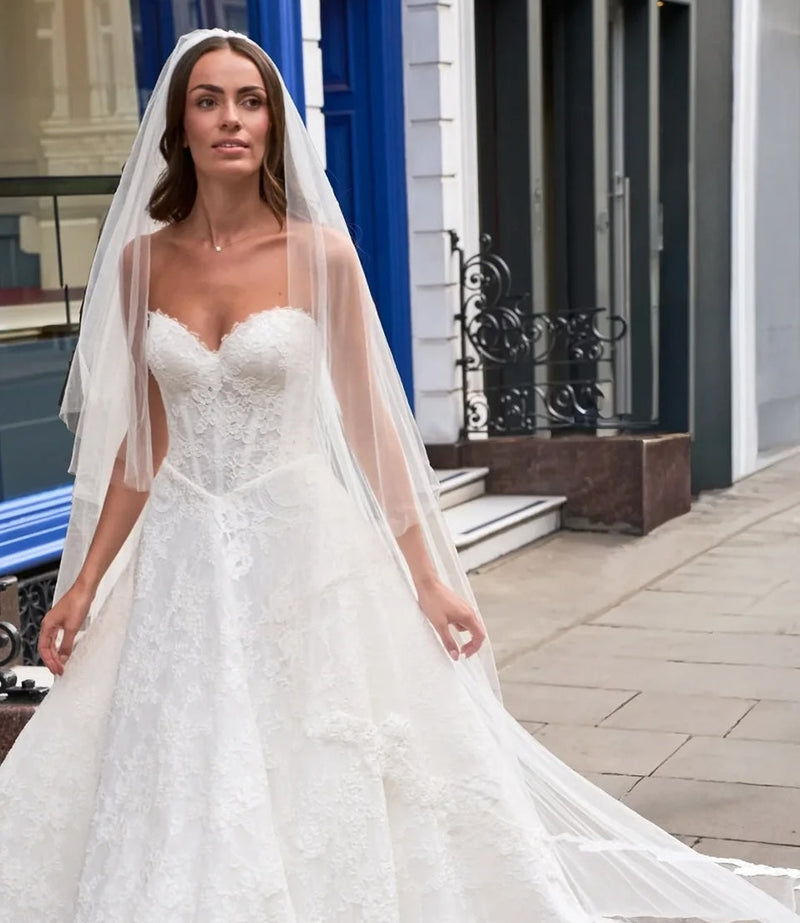
Lace is one of the most searched and least understood elements of bridal fashion. Brides come in knowing they want it, but rarely knowing what kind, and the difference matters more than most people realize. Here is a breakdown of every major lace type you will encounter while shopping, what makes each one distinct, and how to figure out which one
Alençon Lace
Pronounced ah-lawn-SOHN, Alençon is often called the "Queen of Laces." Its defining feature is the cordonnet, a fine cord that outlines each motif and gives the pattern a slightly raised, three-dimensional edge. Woven on a fine net background, it drapes beautifully and holds its shape well, reading as polished and structured even from a distance.
Best for: formal, classic silhouettes where the lace is meant to make a statement.
Chantilly Lace
Chantilly uses a delicate hexagonal net ground with motifs worked directly into it, resulting in a lace that feels almost weightless. It is known for its flowing, feathery edges and soft, diffused quality. Up close it is intricate. From across a room it reads as romantic rather than structured. It is more delicate than most laces and requires careful handling in construction.
Best for: A-line silhouettes, overlay skirts, and veils. It photographs beautifully in natural light.
Embroidered Lace
Rather than being woven as a standalone fabric, embroidered lace is created by stitching motifs, beading, or thread patterns directly onto a base fabric, typically tulle or organza. This gives designers control over placement and density, and allows for a range from subtle and scattered to bold and heavily textured. Many versions incorporate beading, sequins, or metallic thread, making it one of the most versatile lace categories in couture.
Best for: brides who want texture, dimension, and a fashion-forward edge without committing to an all-over lace gown.
Corded Lace
Corded lace is woven with raised cords or threads running through the pattern, adding subtle dimension and definition without the full sculptural weight of something like Venetian lace. It sits somewhere between flat woven lace and heavily three-dimensional lace, offering a refined texture that reads as elevated without being overpowering. It is a common choice in couture for brides who want visual interest without drama.
Best for: brides who want a lace with quiet depth and definition, particularly on fitted bodices and sleeves.
Venetian Lace
Venetian lace is needle-made with no net background. Its motifs are connected by small thread bridges called "brides," making it heavy, sculptural, and unmistakably three-dimensional. It is not the lace you reach for when you want softness and flow. It is the lace you reach for when you want presence.
Best for: statement details such as a dramatic neckline, cuffs, or back rather than full coverage.
Guipure Lace
Like Venetian lace, guipure has no net background. Its motifs connect directly to each other, giving it a bold, graphic quality that reads as more modern than traditional lace. It is structured, holds its shape well, and has a clean confidence that works particularly well on minimalist silhouettes.
Best for: the bride who wants lace but leans modern. Guipure pairs well with sleek, uncluttered silhouettes where the pattern itself does the talking.
Re-embroidered Lace
Re-embroidered lace starts as a woven lace and is then further embellished with additional thread, beading, or sequins layered on top. The result is significantly more depth and dimension than the base fabric alone. When you see a lace that seems to have multiple layers of texture and catches the light in different ways, re-embroidery is likely involved.
Best for: brides who want maximum richness and texture, particularly in bodice detailing or statement sleeves.
Schiffli Lace
Schiffli is machine-made lace produced on a Schiffli embroidery machine, allowing for consistent, detailed patterns at a lower price point than handmade lace. Quality varies significantly. At its best it is nearly indistinguishable from handmade. At its worst it looks flat and lacks depth. It is worth asking your stylist whether the lace on a gown is Schiffli or handmade, as it affects both the look and the longevity of the fabric.
Best for: brides working within a tighter budget, or as a secondary lace element within a larger gown design.
Eyelet Lace
Eyelet is an open-weave lace with punched or embroidered holes forming the pattern. It reads as fresh and relaxed rather than formal, and is not typically found in high-end couture collections. It has a charming, effortless quality that suits informal settings well.
Best for: outdoor or destination ceremonies, second looks, or brides who want something light and unpretentious.
How to Choose
The right lace depends on your silhouette, your venue, and how you want to feel in the gown. If you want classic and formal, Alençon. Soft and romantic, Chantilly. Textured and fashion-forward, embroidered or re-embroidered. Modern and graphic, guipure. Sculptural drama in a specific detail, Venetian. Quiet depth without weight, corded lace.
It is also worth knowing that most couture gowns combine lace types. A designer might use Alençon at the bodice for structure, then transition into Chantilly for the skirt to create flow. Understanding what you are looking at helps you articulate what you love about a gown, which makes your appointment significantly more productive and gets you to your dress faster.